
Inside the After-Hours World of Bobby Chills
Bobby Chills brings WMG its after-hours blues-soul voice: intimate, bruised and built around heartbreak, empty streets, late-night rooms and unanswered questions.
Bobby Chills belongs to the hour when the room has emptied, the glass is almost finished, and the truth has nowhere left to hide.
His music does not rush towards drama. It sits with it. Built around blues-soul feeling, late-night atmosphere and a voice that carries emotional weight without needing to force it, Bobby’s world is one of dim bars, wet pavements, old regrets and questions that stay awake long after midnight.
Within the Wareham Music Group catalogue, Bobby Chills gives the label its after-hours voice. He is the artist for heartbreak without theatre, loneliness without self-pity, and soul music that sounds as though it has been lived before it was sung.

The Voice From the After Hours
Bobby’s voice is built around restraint.
There is grit in it, but not for decoration. It feels earned rather than performed. His delivery carries the sense of a man who knows the weight of a line before he sings it, letting the silence around the vocal do almost as much work as the words themselves.
That is what gives Bobby Chills his identity. He does not sound like an artist trying to impress the room. He sounds like someone alone in it, telling the truth because there is no one left to fool.
Bobby Chills is not a voice of grand collapse. He is a voice of what remains afterwards.
His songs work best when the vocal is close, intimate and human. The power is not in a huge gesture. It is in the rough edge of a phrase, the pause before a confession, the sense that he is holding something back because saying it plainly is already enough.
Blues-Soul in Low Light
Bobby’s sound sits in a blues-soul space: warm, slow-burning, atmospheric and emotionally direct.
The arrangements should feel close to the room rather than far away from it. A low-lit groove. A touch of guitar. Piano or organ in the shadows. Drums that do not crowd the vocal. Everything around Bobby should support the feeling that the song is happening in real time, late at night, somewhere small enough for every word to matter.
This is not polished heartbreak. It is not glossy sadness. Bobby’s music needs grain, smoke, warmth and space.

His first single, These Tears, introduced that emotional identity clearly. It was a song of grief and restraint, the sound of heartbreak not as spectacle, but as evidence. Ain't No Comfort In This Town Tonight then widened the world around him, turning the feeling into a place: the empty town, the late-night street, the bar that cannot fix what has already been broken.
Where Does That Leave Me, released as part of the double single, brought the question inward. If the title track walks through the town looking for comfort, Where Does That Leave Me sits with what happens when even the questions start to feel familiar.
The Emotional Geography
The Bobby Chills emotional world has a clear geography.
It lives in towns after closing time. In rooms where someone has just left. In streets that remember too much. In the space between a phone call that never comes and a song that says what the person could not.
His themes return to regret, loneliness, memory, lost love, unanswered questions and the slow dignity of carrying pain without turning it into performance.
Bobby’s songs do not pretend that heartbreak is clean. They understand that it has weather, lighting, furniture, streets and habits. The emotional world is physical: a chair at the back of the bar, a wet pavement, a dim sign in the distance, a glass left on the table.
Bobby Chills turns heartbreak into a place you can see.
That is what makes him more than simply a blues-soul singer. His catalogue is beginning to feel like a series of scenes from the same late-night film. Each song adds another room, another street, another unanswered question.
The Bobby Chills Visual World
Visually, Bobby Chills should feel cinematic, shadowed and lived-in.
His world is made from dim bars, smoke, worn suits, open collars, amber lamps, rain on glass, closed shopfronts, blues clubs and empty streets. The styling should feel classic but not costume-like. Bobby should look as though he belongs in those rooms, not as though he has been dressed for them.
The best Bobby Chills imagery should feel almost blues-noir. Warm light against darkness. A man alone but not defeated. Weathered, reflective, quiet. The frame should carry history without needing to explain it.
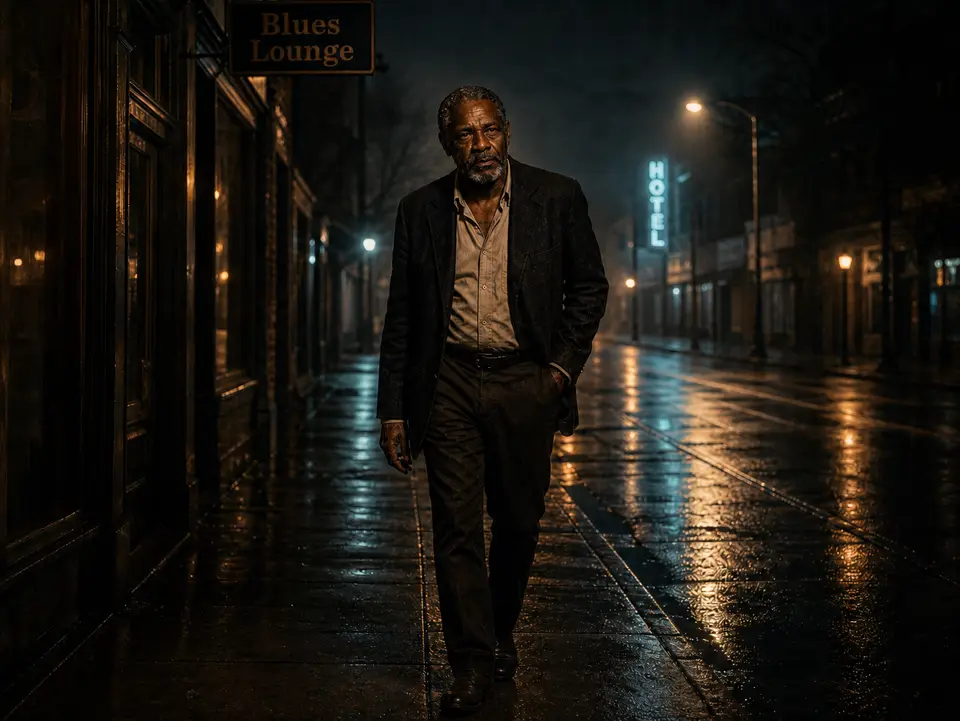
This visual identity matters because Bobby’s music is so atmospheric. The songs already suggest rooms, streets and light. The imagery should deepen that world, making the listener feel that every release belongs to the same after-hours landscape.
Where to Start
For new listeners, Bobby’s world begins with three essential points:
- These Tears: The first statement. A blues-soul introduction built around heartbreak, restraint and the quiet dignity of a voice that has lived every line.
- Ain't No Comfort In This Town Tonight: The second release, and the track that turns Bobby’s emotional world into a place. Lonely streets, late-night rooms and the search for comfort that never quite arrives.
- Where Does That Leave Me: The inward-facing companion piece. A song built around the question that remains after love, certainty and easy answers have disappeared.
- Midnight Don't Answer: The debut album, bringing Bobby’s after-hours world into fuller focus.

The WMG Story
Within Wareham Music Group, Bobby Chills gives the label its blues-soul after-hours voice.
He brings a darker emotional palette to the roster: not despair for its own sake, but music that understands the value of silence, shadow and slow confession. Where Betty Blane gives WMG classic soul elegance and romantic poise, Bobby brings the room after the romance has broken down.
That contrast matters. It makes the WMG catalogue feel broader, deeper and more human. Bobby is not there to brighten the room. He is there to make the low light mean something.
Bobby Chills gives WMG its voice for midnight, memory and the questions that do not answer back.
His place in the label is about atmosphere as much as genre. He helps define WMG as a home for artist worlds, not just individual songs. Every Bobby Chills release should feel like another chapter in the same night.
What Comes Next
As Bobby Chills’ catalogue grows, the strength will be in staying close to that emotional truth.
His world does not need to become louder to become bigger. It can deepen through more rooms, more streets, more memories, more songs that sit with the difficult part instead of rushing past it.
There is space for heartbreak here, but also resilience. There is space for regret, but also dignity. Bobby’s music understands that sometimes the most powerful thing a song can do is stay with someone in the dark until the feeling has somewhere to go.
Bobby Chills is the sound of the late hour, the empty street and the voice that finally says what silence has been holding.
Summary
Bobby Chills brings WMG its after-hours blues-soul voice, built around heartbreak, restraint, empty streets and late-night rooms. His world is intimate, cinematic and bruised, giving the label a darker emotional centre where memory, regret and dignity sit quietly in the same low light.
Related