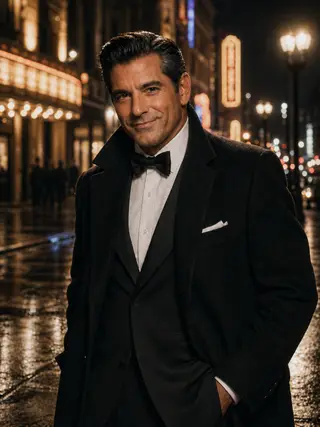
Tony Medley: The Art of the Crooner
Tony Medley brings the great American crooner tradition into the WMG catalogue with charm, elegance and a voice made for big bands, romantic ballads and the hour when the lights begin to soften.
There is something wonderfully unfashionable about Tony Medley.
Not outdated. Not nostalgic for nostalgia’s sake. Unfashionable in the best possible sense: the polished suit, the orchestra waiting behind him, the microphone at centre stage and the belief that a singer can still hold a room simply by knowing precisely how to deliver a song.
Tony belongs to that tradition.
His world is built from swing, romance, late-night confidence and the quieter moments that arrive when the applause has faded. Sometimes he is the gentleman commanding the room. Sometimes he is the man left alone in it. What connects both sides is restraint: the sense that Tony never needs to push too hard to make himself heard.
The Voice
Tony’s voice is the centre of everything.
Warm, controlled and conversational, it carries the easy authority associated with the classic American crooner without becoming an impersonation of the past. There is confidence in the delivery, but rarely unnecessary force. The attraction comes from phrasing, timing and personality.
On an upbeat number, Tony can lean into a lyric with an amused smile in his voice. He can sit fractionally behind the beat, let the band move around him and make a line feel almost spoken before allowing the melody to take over.
On a ballad, that same control becomes something more intimate. The swagger disappears. Space opens around the vocal. A held note, a pause or a softened final phrase can carry more weight than a grand vocal display.
Tony Medley’s strongest instrument is not volume. It is timing.
That ability to move between showman and romantic gives him room to inhabit several corners of the crooner tradition while remaining recognisably himself.
The Sound
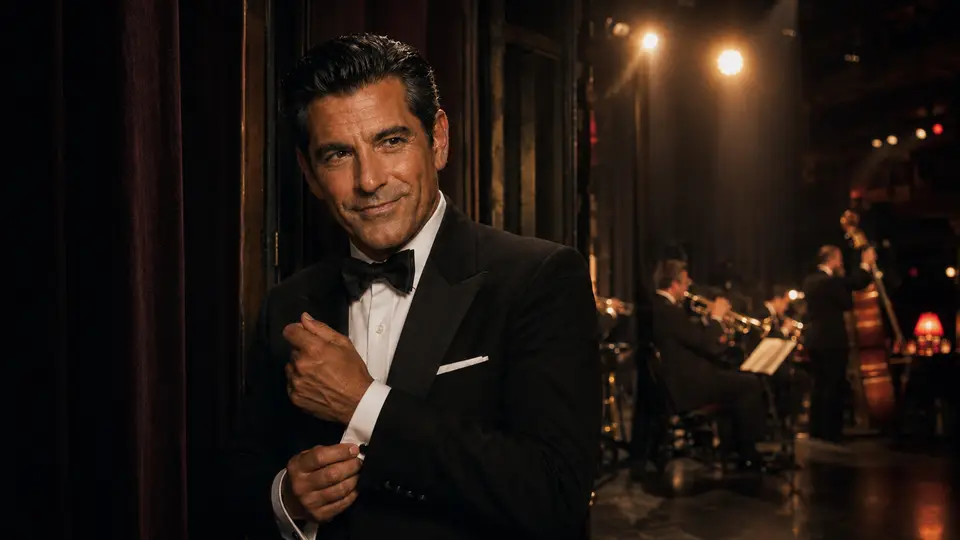
At its most exuberant, Tony’s music belongs beneath stage lights.
Brass sections lift the choruses. Upright bass and drums create an effortless swing. Piano, guitar and orchestral colour fill the spaces without crowding the singer. The arrangements can be bold, but the vocal remains the point around which everything turns.
Elsewhere, the room becomes smaller.
Strings replace brass. Tempos settle. The atmosphere moves from the theatre to the hotel suite, from the centre of the party to its final hour. Those romantic ballads are as important to Tony’s identity as the swinging numbers because they reveal what sits beneath the polish.
That contrast is central to his appeal. Tony can sound completely at home with a full orchestra behind him, then make the next song feel as though it is being sung to one person across the room.
The musical language may come from another era, but the aim is not historical reconstruction. Tony’s catalogue uses the elegance, melody and craftsmanship of classic crooning as a living musical vocabulary.
The Emotional World
Romance runs through Tony Medley’s world, but romance does not always mean the same thing.
There is flirtation. There is admiration. There are evenings when everything feels possible and songs that seem built for a crowded dance floor.
Then there are the departures.
A train platform before dawn. A quiet room after midnight. The memory of someone who has already gone. The moment when charm stops being armour and something more vulnerable begins to show.
Tony works because both versions of him feel believable.
The confident gentleman and the reflective romantic are not separate characters. They are two halves of the same one. The man who knows how to own a room also understands what the room feels like when everyone else has left.
That gives even the lightest material a little more depth, and keeps the slower songs from becoming merely sentimental.
The Visual Identity
Visually, Tony inhabits one of WMG’s most immediately recognisable worlds.
Tuxedos and dinner jackets. Vintage microphones. Velvet stages. Brass instruments catching warm light. Elegant supper clubs, old theatres and beautifully appointed interiors. Railway platforms before dawn and city streets after the evening has finished.
But the intention is never fancy dress.
Tony should look as though these places genuinely belong to him.
The strongest images tend to balance refinement with a sense of life beyond the pose: Tony turning towards somebody outside the frame, walking through an empty station, relaxing after a performance or sitting alone as the night winds down.
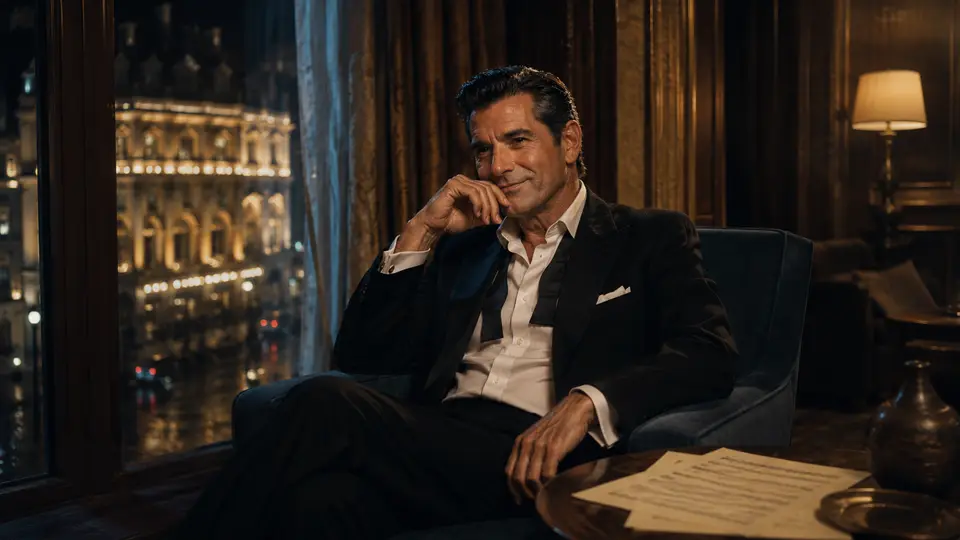
The palette follows the same principle: black, ivory, midnight blue, warm gold, deep burgundy and the cool blue of the hour just before morning.
It is a world of polish, but never sterility.
Where to Start
Tony’s debut album, Only The Best, provides the clearest introduction to the different sides of his character.
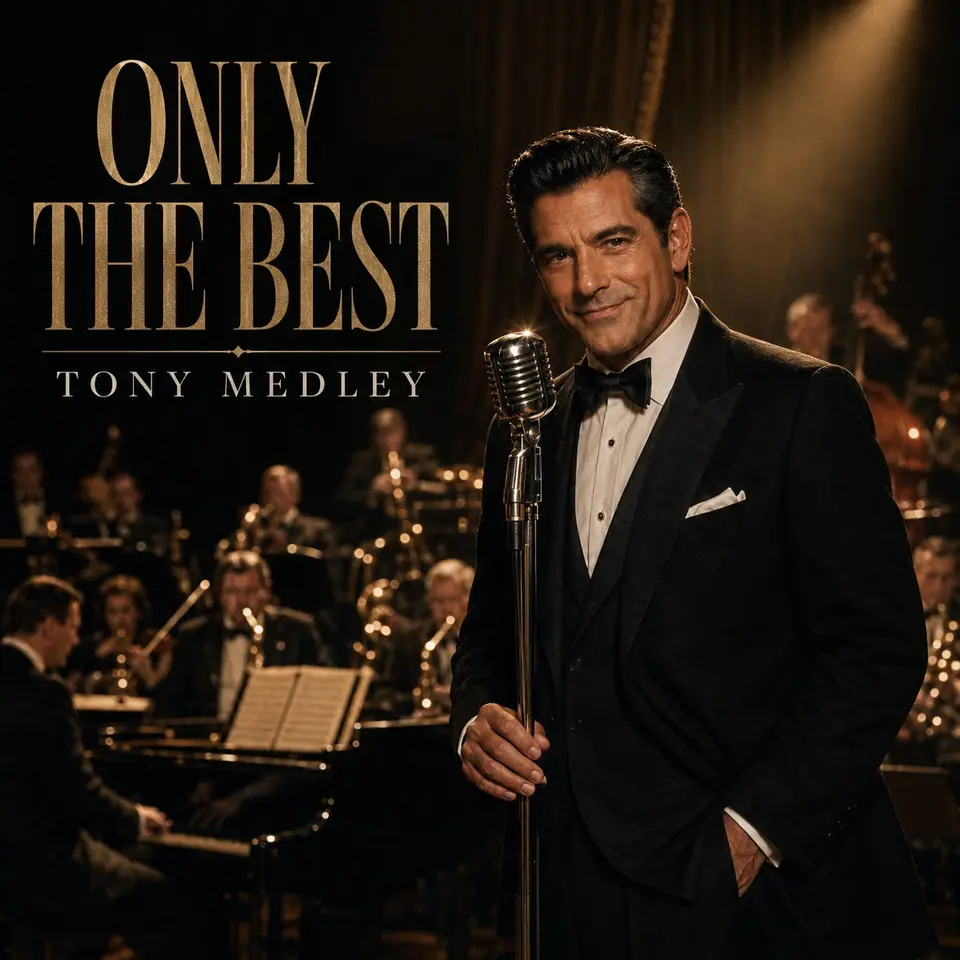
For the full Tony Medley picture, begin with a few different corners of the record:
- I’m Sitting on Top of the World for the expansive, optimistic side of Tony’s sound.
- Ain’t She Sweet for his lighter, flirtatious charm.
- Stardust for the romantic balladeer beneath the showman.
- Bye Bye Blackbird for something more cinematic and reflective.
- My Blue Heaven for the quiet, intimate final chapter of the debut era.
Together, they show why Tony works best not as one fixed type of crooner, but as a complete character capable of moving from the stage to the small hours without losing his identity.
The WMG Story
Within Wareham Music Group, Tony occupies an important space.
He brings the label its crooner tradition: melody, orchestration, elegance and performance built around the personality of the singer.
That makes his catalogue distinct within WMG, but it also complements the wider roster. Where other artists may live in soul clubs, blues bars or different corners of American popular music, Tony gives the label the theatre, the supper club and the big-band stage.
More importantly, he demonstrates what this kind of music can still offer when treated seriously.
There is pleasure in hearing a great melody properly sung. There is pleasure in an orchestra being allowed to sweep. There is pleasure in wit, charm and romantic sincerity delivered without irony.
Tony Medley exists comfortably inside all three.
What Comes Next
The possibilities within Tony’s world are much broader than a single sound.
There is swing and orchestral pop, romantic balladry, jazz, Christmas music, cinematic storytelling and the vast tradition of songs built for a singer standing in front of an orchestra.
Whatever direction the catalogue takes, the centre should remain the same: a recognisable voice, an elegant musical world and the feeling that Tony belongs wherever the lights are low and somebody still has one more song to sing.
The spotlight may be where Tony Medley first catches the eye.
The moments after it goes down are what make him interesting.
Summary
Tony Medley brings classic crooner elegance into the Wareham Music Group catalogue through big-band swing, romantic balladry and a warm, conversational vocal identity. From the confident showman of Only The Best to the quieter figure left behind after the evening ends, Tony’s world is built around charm, melody, restraint and timeless stagecraft.
Related