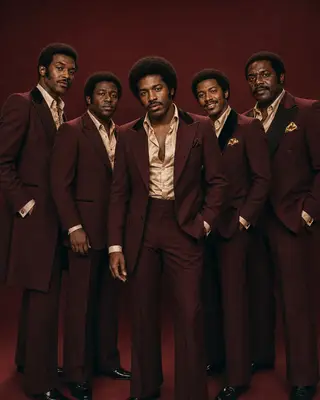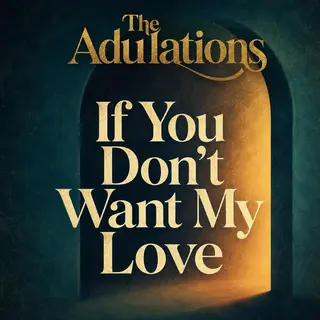
If You Don’t Want My Love: The Adulations Draw the Line
The Adulations reach the end of their patience on If You Don’t Want My Love, a poised but powerful Philadelphia soul declaration about knowing when devotion has become a one-sided affair.
There comes a point when waiting stops being romantic.
If You Don’t Want My Love finds The Adulations standing at precisely that threshold. The feeling is still there. The offer remains sincere. But the man at the centre of the song is no longer willing to remain indefinitely in the space between rejection and possibility.
Taken from the group’s self-titled debut album, the single turns romantic frustration into something firmer: a declaration of self-respect delivered without bitterness, cruelty or empty bravado. It is the sound of a man realising that love cannot survive on uncertainty alone.
Love Cannot Live in the Waiting
The song begins inside a familiar emotional conflict. He has waited. He has tried to understand. He has continued offering a love that is repeatedly held at a distance.
What changes is not the depth of his feeling, but his willingness to remain suspended by it.
The central refrain, “If you don’t want my love, someone else will”, could easily have become a boast. In the hands of The Adulations, it feels more complicated. There is confidence in the line, but also disappointment. He is not celebrating the thought of leaving. He is finally accepting that he may have to.
That distinction gives the song its emotional weight.
This is not revenge. It is not a threat designed to provoke jealousy. It is a boundary spoken by someone who knows that devotion must eventually be met with a decision.
Love may ask for patience, but it should never require someone to surrender their dignity.
Isaiah St. James delivers that message with the authority that defines The Adulations. His voice carries masculine warmth, controlled grit and the unmistakable tension of a man trying to remain composed while saying something that has taken too long to admit.
He does not plead. He does not disguise the hurt. He lets both strength and vulnerability occupy the same line.
The Sound of a Decision
Musically, If You Don’t Want My Love sits firmly inside The Adulations’ early-1970s Philadelphia soul world.
Warm electric piano, rounded bass guitar and tightly controlled drums establish a patient mid-tempo groove. Clean guitar accents move through the arrangement while restrained horns and sweeping strings give the song its scale. The production remains polished and romantic, but there is tension underneath the elegance.
The four supporting voices are essential to that tension.
Leon Mercer, Ellis Monroe, Raymond Cole and Calvin Brooks do more than reinforce Isaiah’s lead. Their harmonies act almost like the thoughts gathering behind him. Short responses add pressure to the verses. Sustained chords widen the emotional space. When the central declaration returns, the full group gives private frustration the force of collective testimony.
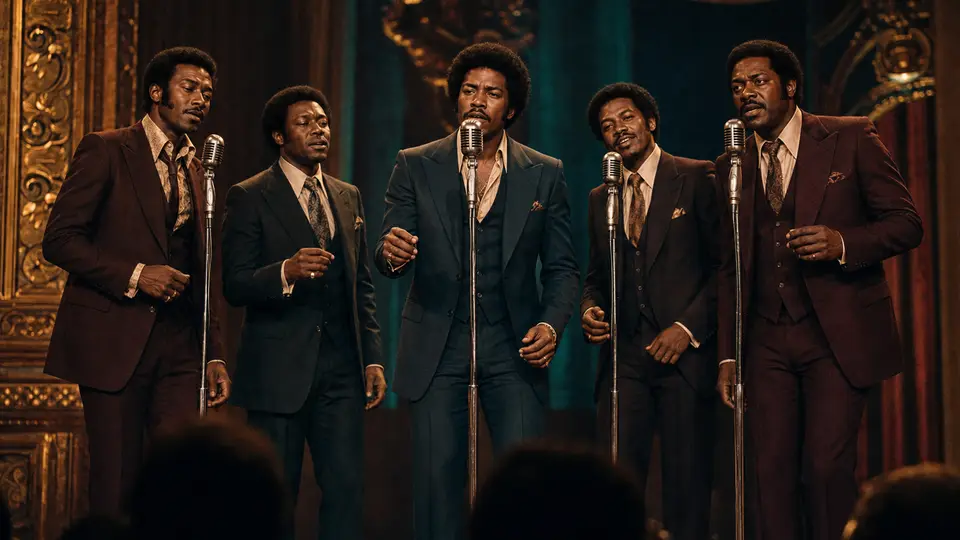
The arrangement does not rush towards confrontation. It builds towards certainty.
Strings rise without overwhelming the rhythm section. Horns provide controlled punctuation rather than spectacle. Isaiah’s vocal grows more forceful as the song progresses, yet the performance never loses its restraint. Even at its most emphatic, the record remains elegant.
That balance is central to The Adulations. Their songs allow men to speak openly about need, fear, desire and rejection without removing their dignity. Emotion is not treated as weakness. It becomes the source of the performance’s authority.
From the Debut Album
As the eighth track on The Adulations, If You Don’t Want My Love arrives after the album has already explored attraction, uncertainty, devotion and the fear of losing someone.
Here, the emotional question changes.
Instead of asking whether love can be saved, the song asks how long one person should continue trying to save it alone.
That gives the track an important place within the record. The album’s romantic world is not built only from grand promises and unwavering devotion. It also recognises that love requires reciprocity. Commitment matters, but so does the courage to step away when commitment is continually refused.
The song therefore reveals another side of Isaiah St. James. His commanding delivery is still present, but it is no longer being used solely to pursue or persuade. This time, it protects something.
His own sense of worth.
He is not withdrawing the love because it was false. He is withdrawing himself because the love was real.
When the Door Opens

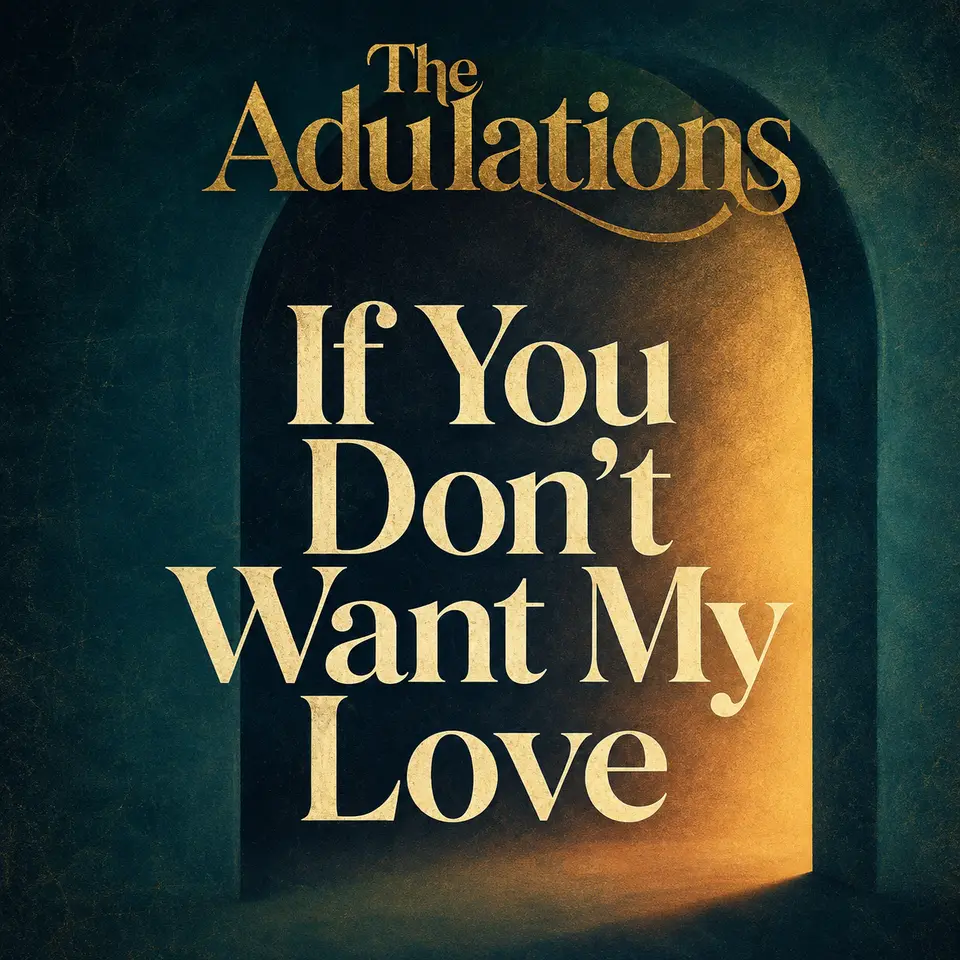
The visual world of If You Don’t Want My Love belongs to that moment of decision.
An open doorway. A quiet room. A jacket waiting to be lifted from the back of a chair. Warmth on one side and uncertainty on the other.
The official artwork captures the same idea through an abstract portal emerging from deep teal and midnight tones. Its restrained glow suggests possibility, but not necessarily reconciliation. The way forward could lead back into love. It could just as easily lead towards a life no longer organised around waiting.
The power lies in the fact that the choice has finally become his.
Love With a Limit
If You Don’t Want My Love does not abandon romance. It gives romance a standard.
The man speaking would still choose the woman he loves. He would still welcome an honest answer. What he will no longer accept is being kept close enough to hope, but too far away to be chosen.
For The Adulations, that makes the song more than a confident departure. It is another form of love declaration. One that says devotion deserves clarity, affection deserves reciprocity and even the deepest feeling must have a limit.
If You Don’t Want My Love is released by Wareham Music Group as a single from The Adulations’ self-titled debut album.
Summary
The Adulations draw a line between patience and self-abandonment on If You Don’t Want My Love. Driven by Isaiah St. James’ commanding baritone and the group’s sweeping Philadelphia soul harmonies, the single turns romantic rejection into a poised declaration of dignity, choice and emotional self-respect.