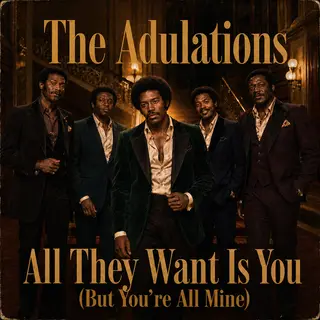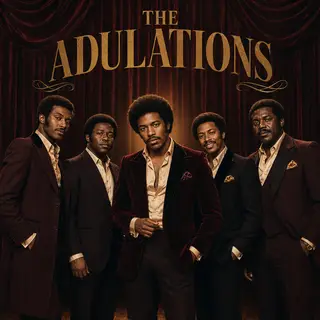
The Adulations Make Their Opening Statement
The Adulations arrive with a self-titled debut built on commanding baritone soul, sweeping Philadelphia orchestration and five voices united by one conviction: love is too important to be understated.
Some soul records introduce a singer. The Adulations introduces a whole room of voices.
At its centre stands Isaiah St. James, whose commanding baritone gives the album its urgency, authority and emotional weight. Around him, Leon Mercer, Ellis Monroe, Raymond Cole and Calvin Brooks turn one man’s declarations into something larger: a shared testimony of desire, loyalty, pride, heartbreak and complete romantic surrender.
This is a debut album that treats love seriously. Not as an easy promise or a passing attraction, but as something capable of challenging a man’s certainty, testing his dignity and drawing truths from him that he might otherwise have kept hidden.
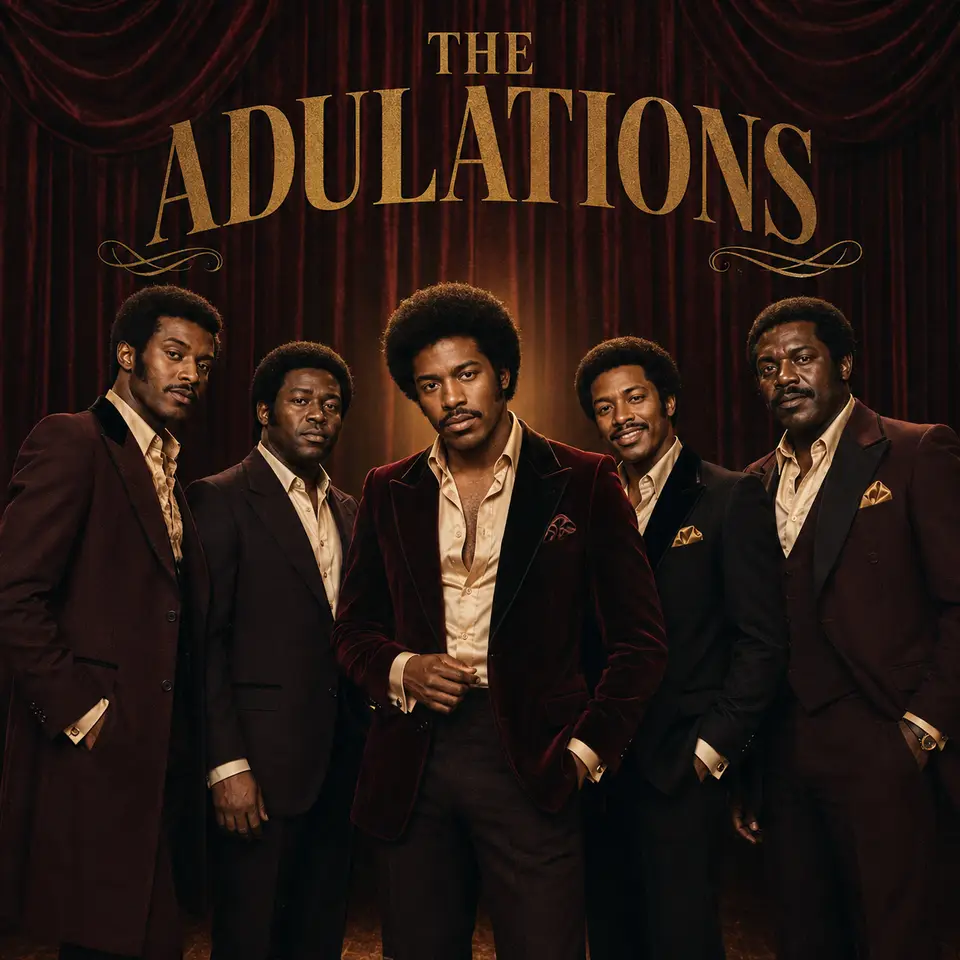
Five Voices, One Devotion
The Adulations belong to the grander tradition of male vocal-group soul. Their music has scale, but it is never distant. The strings may rise, the harmonies may widen and the arrangement may fill the room, but the emotion begins with direct conversation.
Isaiah does not sing around what he feels. He addresses the woman in front of him. He asks whether she is staying, whether her promises still mean something and whether the love between them is strong enough to survive pride, doubt and the attention of everyone outside it.
His voice is built for that confrontation. There is warmth in it, but also grain. Tenderness sits alongside masculine certainty. He can sound commanding without becoming cold, and vulnerable without surrendering the strength that makes him such a compelling centre for the group.
The other four voices do more than support him. Leon brings lift and hope. Ellis adds warmth and understanding. Raymond sharpens the drama. Calvin gives every promise its foundation. When they come together, Isaiah’s private feeling becomes a declaration shared by all five men.
The lead voice carries the confession. The group makes it impossible to ignore.

The Sound of Five Men in One Room
The album’s musical identity is rooted in early-1970s Philadelphia soul: warm electric piano, melodic bass guitar, clipped rhythm guitar, precise drums, restrained horns and strings that rise at exactly the moment the emotion can no longer remain contained.
The arrangements leave space for the voices. Songs may begin with Isaiah alone or nearly alone, drawing the listener into the conversation before the group gradually gathers around him. A tenor answer appears. A low harmony gives the line more weight. Then the full group arrives, and what began as one man’s uncertainty becomes a chorus of conviction.
That movement between intimacy and scale defines the record. The Adulations can be restrained, but they are never timid. Their slower moments carry the closeness of a late-night conversation. Their larger choruses feel designed for theatre stages, velvet curtains and a room suddenly illuminated by five voices moving as one.
There is polish throughout, but it never becomes spotless. Isaiah’s controlled rasp, the small pauses before a difficult admission and the push and pull between lead and group keep the songs human. The album understands that romantic confidence becomes more interesting when something real is at risk.
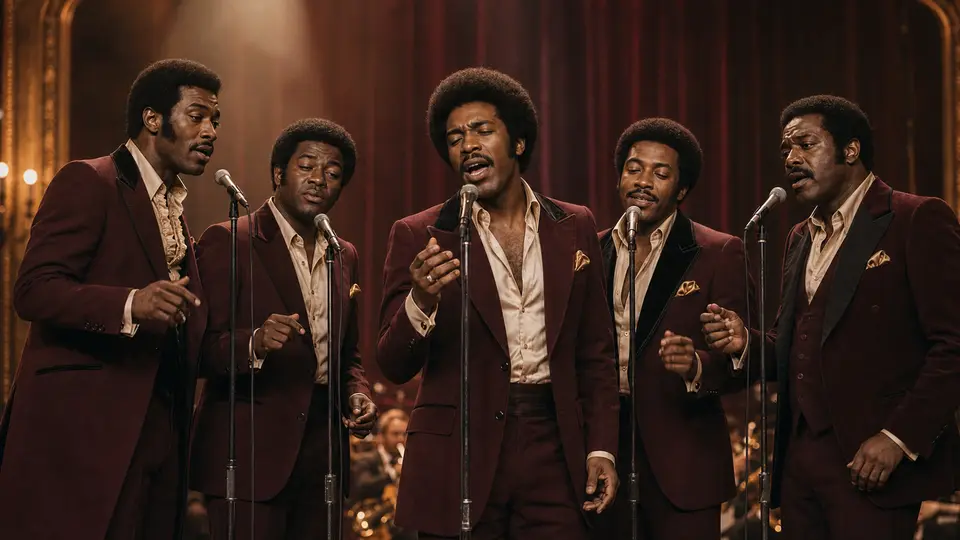
Eleven Songs About Being Chosen
Across its eleven tracks, The Adulations examines love from almost every side: possession, doubt, separation, devotion, jealousy, defence, sacrifice and return.
The opening track and first single, “All They Want Is You (But You’re All Mine)”, establishes the group’s emotional character immediately. Its title holds two feelings at once: pride in being loved by someone others admire, and the fear that admiration might one day pull her away. The statement is possessive, but the feeling beneath it is exposed. Certainty is being used to hold anxiety in place.
From there, “She’s Walking Away” and “Running On Borrowed Time” move the record towards the possibility of loss. The relationship is no longer secure simply because the singer wants it to be. Time has become limited, footsteps are moving towards the door and love must now prove whether it can survive what has been left unresolved.
“Seasons of Love” widens the perspective, suggesting a feeling measured not by one dramatic evening but by change, endurance and the passing of time. “Am I Losing Her” then brings the question back into the room. It is the sort of title that strips away performance. For all Isaiah’s authority, he is still a man who needs an honest answer.
The album’s second half refuses to settle into one mood. “Keep That Love Coming” reaches for closeness and continuation, while “They All Say She’s Crazy” pushes back against the judgement of people who believe they understand someone from the outside. That defiance returns in “They Don’t Know Her Like I Do”, where intimacy becomes its own form of knowledge.
“If You Don’t Want My Love” introduces a harder boundary. Devotion may be complete, but it cannot remain indefinitely where it is not welcomed. “Everything I Have” answers with the opposite extreme: the willingness to offer love without reservation.
By the time the record reaches “Back In Your Arms”, return feels earned rather than convenient. After doubt, departure, pride and uncertainty, the album closes with the place its songs have been reaching towards all along: not victory over another person, but the restoration of closeness.
These are not love songs whispered from a distance. They are sung face to face, while there is still time to change the ending.
A Debut With Its Own Centre of Gravity
A self-titled debut carries a particular responsibility. It must do more than collect songs. It must explain who the artist is.
The Adulations does that with unusual clarity. This is a group built around the contrast between strength and exposure. Isaiah’s voice can command the room, but the songs repeatedly place him in situations where authority alone is not enough. He must ask, admit, wait, forgive and sometimes accept that love cannot be secured through certainty.
The harmonies give those moments their scale. Four voices gather around the lead not to protect him from vulnerability, but to underline it. The result is soul music in which masculinity is neither distant nor invulnerable. These men can carry themselves with discipline, dignity and assurance while still admitting how deeply another person can affect them.
Within Wareham Music Group, The Adulations occupy a distinct place. They bring orchestral scale, five-man vocal architecture and the commanding adult romance of Philadelphia soul into the catalogue. Their music is elegant, but not delicate. Romantic, but not passive. Historically grounded, but driven by emotions that remain immediate.
This debut does not present five men looking backwards at a vanished era. It presents a group with a clear purpose of its own.
Love Sung Like a Declaration
The Adulations begin their story with an album about what happens when composure meets feeling.
Across eleven songs, they ask whether love can withstand attention, separation, time, pride and the opinions of everyone standing outside the relationship. Sometimes the answer arrives as a promise. Sometimes it comes as a warning. At other moments, it is simply a man admitting that the thought of losing someone has shaken him more than he expected.
Through it all, five voices remain bound by one devotion.
The Adulations is the self-titled debut album from The Adulations, released through Wareham Music Group.
Summary
The Adulations make their debut with eleven songs of desire, loyalty, uncertainty and romantic conviction, led by Isaiah St. James’ commanding baritone and surrounded by rich five-man harmony. With sweeping Philadelphia soul arrangements and an emotional world shaped by masculine strength and vulnerability, the album introduces a group for whom love is never casual and never quietly expressed.